
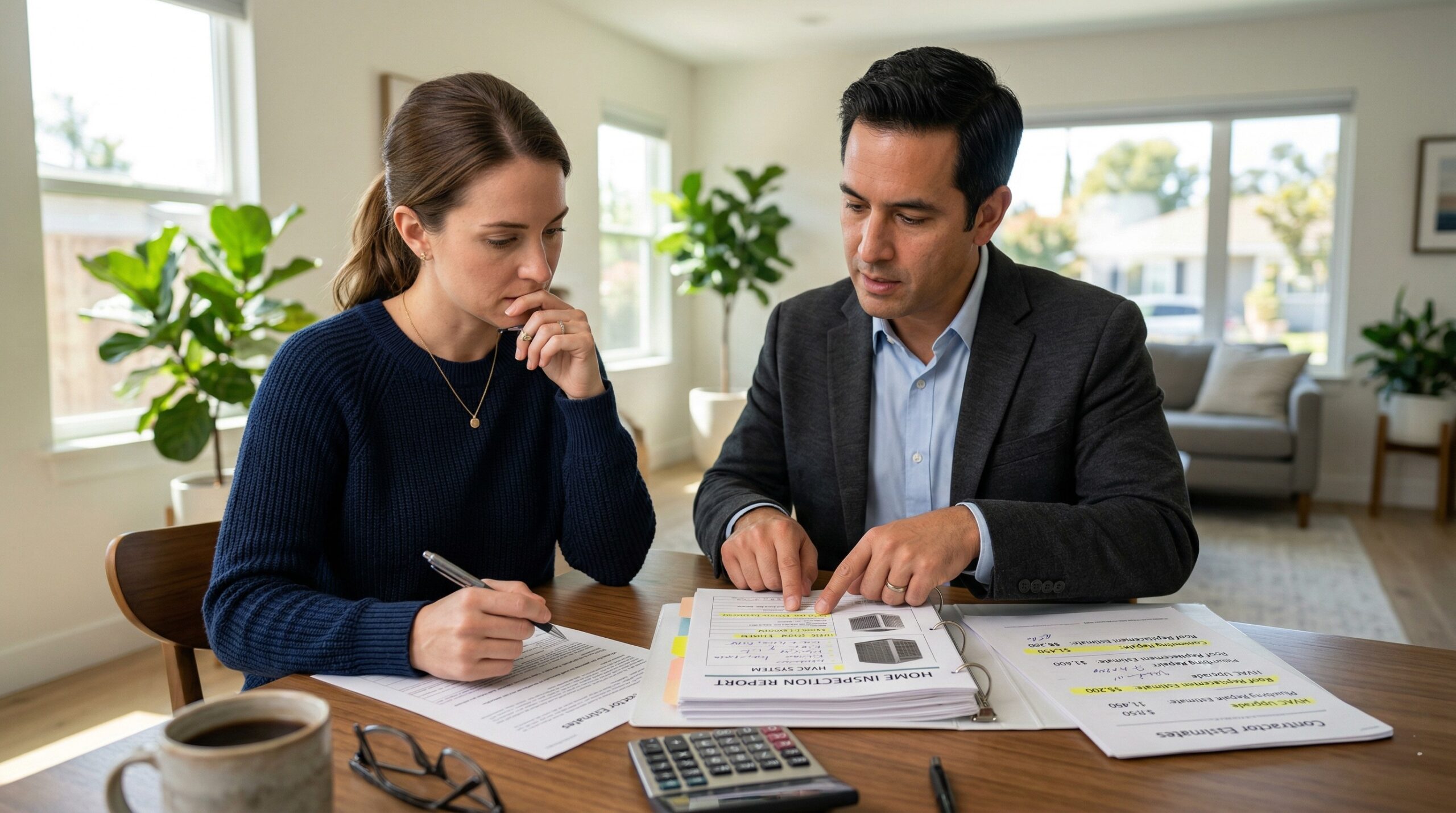
Most California homebuyers leave money on the table at closing, not because they don’t negotiate, but because they negotiate the wrong thing.
A seller concession is a credit the seller gives you at closing to cover your costs: mortgage buydown, closing fees, prepaid taxes, or repairs. For context, in a market where the average Bay Area home closes at $1.2M, the difference between asking for a 1% price cut and asking for a 1% closing cost credit can be $8,000–$15,000 in real cash savings.
This guide explains exactly how seller concessions in California work, how much you can request based on your loan type, and whether a concession beats a price reduction on your specific purchase.
Try the free calculator first
Enter your purchase price, down payment, and loan type at seller-concession-calculator to get your personalized maximum concession and comparison in under 30 seconds.
What Is a Seller Concession?
A seller concession, also called a seller credit, interested party contribution (IPC), or seller-paid closing costs, is money the seller agrees to contribute at closing to help cover your expenses as the buyer.
What concessions can cover:
- Loan origination fees and lender charges
- Escrow and title fees
- Prepaid items: property taxes, homeowner’s insurance, HOA dues
- Discount points to permanently or temporarily buy down your interest rate
- Appraisal fee, inspection fee, and other transaction costs
What concessions cannot cover:
- Your down payment. Seller credits cannot be used toward the down payment under any circumstances.
- More than your actual closing costs. Even if the limit is higher, the seller cannot give you more than you are actually spending.
- Undisclosed contributions. Any undisclosed item of value from the seller must be reported to the lender.
Maximum Seller Concessions by Loan Type (2026)
Federal agencies cap how much sellers can contribute. The limits differ by loan type and, for conventional loans, by how much you put down. These limits exist to prevent artificial home price inflation.
| Loan Type | Down Payment | Max Concession | Source |
|---|---|---|---|
| Conventional | ≥ 25% down | 9% of purchase price | Fannie Mae [1] |
| Conventional | 10–25% down | 6% of purchase price | Fannie Mae [1] |
| Conventional | < 10% down | 3% of purchase price | Fannie Mae [1] |
| FHA | Any (min. 3.5%) | 6% of purchase price | HUD 4000.1 [2] |
| VA | 0% (no min. required) | 4% concessions + unlimited closing costs | VA Handbook [3] |
| Jumbo (> $1.21M in CA) | Varies by lender | Typically 2–3% (verify with lender) | Lender-specific [4] |
Sources: [1] Fannie Mae Selling Guide [2] HUD Handbook 4000.1 [3] VA Handbook M26-7 [4] Lender-specific for jumbo
Important: Concessions are capped at your actual closing costs
Even if your loan type allows 6%, you cannot receive more from the seller than you are
actually spending on closing costs. If your closing costs are $18,000 and your cap is
$54,000, you can only ask for $18,000. Source: Fannie Mae Selling Guide B3-4.1-02 [8].
How Common Are Seller Concessions in California? (2025–2026 Data)
Seller concessions in California are not only just permitted, they are now the norm nationally. Here’s what the data shows:
California: A Market Divided
California is not one market. Whether you can realistically ask for a concession depends almost entirely on which part of the state you’re buying in. Here’s a detailed stark split:
| Metro | Q1 2025 Transactions with Concessions | vs. Year Prior | Market Type | Source |
|---|---|---|---|---|
| San Diego, CA | 60.7% | Rising | Buyer's market | Redfin [9] |
| Los Angeles, CA | 56.1% | +11 ppts YoY | Buyer's market | Redfin [9] |
| National average | 44.4% | +5.1 ppts YoY | Buyer's market | Redfin [9] |
| San Jose, CA | 16.7% | +10.6 ppts YoY | Balanced → seller's | Redfin [9] |
| San Francisco, CA | 14.9% | Low | Seller's market (57% sell above ask) | Redfin [9][11] |
Source: Redfin, Q1 2025 concession rate data ; SF seller’s market status .
Data covers Q1 2025 (Jan–Mar).
Rates fluctuate , so verify current market conditions with a local agent.
Why the Bay Area is the Exception
San Francisco and San Jose have the lowest concession rates of any major U.S. metro because they’re in a fundamentally different supply-demand situation. By late 2025, San Francisco had shifted into a seller’s market which is one of the only seven major metros nationwide in that position.
- 57.1% of San Francisco homes sold above list price — the highest of any major U.S. metro.
- The AI industry boom and return-to-office mandates drove buyer demand sharply higher while Bay Area listings fell.
- In competitive multiple-offer situations, asking for concessions at offer can cost you the deal entirely
Bay Area buyers: your window is post-inspection, not at offer
In SF and SJ, concession requests at offer are rare and often deal-breakers in competitive
situations. But post-inspection credits are different, they happen after you’re already under
contract, are tied to specific documented issues, and sellers expect them. This is where Bay
Area buyers recover the most money: not at offer, but in the negotiation window after
inspection. ficustree’s negotiation tool is built specifically for this moment.
Seller Concession vs. Price Reduction: Which Is Worth More?
This is the question most buyers get wrong. Here’s the math, using a $1,200,000 California home at a 7% interest rate with 20% down (a common Bay Area scenario):
| Scenario | Price Cut | Concession | Advantage |
|---|---|---|---|
| On $1,200,000 home | $12,000 off price | $12,000 credit | — |
| Monthly P&I savings (7% rate) | ~$57/mo | ~$0/mo change | Price cut saves payment |
| Cash freed at closing | $0 | $12,000 | ✓ Concession wins |
| 5-year savings | $3,420 | $12,000 (liquid) | ✓ Concession wins |
| 10-year savings | $6,840 | $12,000 (liquid) | ✓ Concession wins (yr 1–17) |
| With PMI (<20% down) | May reduce PMI | No PMI effect | Price cut may win — verify |
Monthly P&I savings calculated using standard amortization:
P&I = L × [r(1+r)ⁿ] / [(1+r)ⁿ−1]. 5-year and 10-year figures are cumulative savings.
Why concessions usually win
A $12,000 price reduction on a $1.2M home reduces your loan balance by about $9,600 (after 20% down). At 7%, that saves you roughly $57/month in principal and interest, which adds up to $3,420 over 5 years.
The same $12,000 as a closing cost credit stays in your pocket as liquid cash on day one. You can use it for reserves, repairs, or simply keep it invested. The concession is worth $12,000 immediately which is more than the 5-year payment savings from a price cut.
The concession’s advantage flips only when you hold the home long enough for accumulated payment savings to exceed the credit amount (roughly 17+ years at these numbers) and that assumes you don’t reinvest or use the cash for anything else.
When a price reduction might win
- You’re putting less than 10% down and a lower purchase price reduces your PMI obligation
- You’re buying all-cash (no closing costs to cover)
- You plan to hold the home for 20+ years and care more about long-term payment reduction
- Your closing costs are very low and the gap between concession and 5-year savings is narrow
Run your specific numbers
The calculator at
seller-concession-calculator
shows both options side-by-side with your exact price, rate, and down payment. It also shows the break-even year.
What Are Typical Closing Costs in California? (So You Know What to Ask For)
In addition to high property values, California buyers typically pay 2–5% of the purchase price in closing costs, making it one of the highest-cost states in the country.
Typical buyer closing cost components
- Loan origination fee: ~1% of the loan amount (varies significantly by lender. So compare at least 3 Loan Estimates)
- Lender’s title insurance: ~0.22% of purchase price
- Escrow fees: ~0.25% of purchase price (in NorCal, buyer typically pays; SoCal typically splits 50/50)
- Appraisal: $300–$1,000 depending on property
- Home inspection: $300–$600 typically
- Prepaid property taxes and insurance: ~0.75% of purchase price
- Recording fees: ~$244 on average in California
| ⚠ Important: Closing cost customs vary significantly by California county and city. In Northern California, buyers typically pay owner’s title insurance and full escrow fees. In Southern California, sellers typically pay owner’s title and escrow is often split. Charter cities including San Francisco, Los Angeles, Oakland, and others charge additional transfer taxes not included in these estimates. Always request a Loan Estimate from your specific lender for accurate costs. |
How to Ask for Seller Concessions in California (Step by Step)

Step 1: Decide whether to ask at offer or post-inspection
You can ask for seller concessions at two points: in your initial offer, or after the home inspection. You should generally choose one, not both.
- At offer: Useful in a buyer’s market (LA, San Diego) where you have leverage. In competitive Bay Area markets, asking for concessions upfront can cost you the deal. Nationally, 44.4% of transactions included concessions in Q1 2025, but in SF and SJ, that figure is only ~15%. [9]
- Post-inspection: Stronger position in the Bay Area because you have documented justification. A 15-year-old roof or failing HVAC system creates specific, defensible grounds for a credit request.
Step 2: Frame it as a closing cost credit, not a price reduction
Sellers respond better psychologically to “a $12,000 credit toward closing costs” than “reduce your price by $12,000.” The economic effect can be similar, but the framing matters especially if the seller has emotional attachment to their list price.
Step 3: Tie the request to a specific item when possible
A vague concession request is easy to refuse. A specific, documented request is much harder:
- “Credit me $14,000 for the HVAC system replacement documented on page 8 of the inspection report” is stronger than “reduce the price by $14,000.”
- Get repair cost estimates from licensed contractors to back up your numbers.
Step 4: Know your market
- San Francisco / San Jose (seller’s market): Only ~15% of deals include concessions. Focus exclusively on post-inspection leverage. In SF, 57.1% of homes sell above ask.
- Los Angeles (buyer’s market): 56.1% of deals included concessions in Q1 2025, up 11 points year-over-year. Asking at offer is reasonable.
- San Diego (buyer’s market): 60.7% of deals included concessions in Q1 2025, one of the highest rates nationally. Strong leverage at offer.
- Check months of supply in your specific neighborhood. Under 2 months = seller’s market. Over 4 months = buyer’s market.
Step 5: Understand what the seller’s net looks like
Sellers think in net proceeds, not in concessions. A $15,000 concession on a $900,000 sale reduces their net by $15,000. However, if you can show that the concession enables a faster, cleaner close (no repair obligations, no re-inspection), sellers often prefer that to a price reduction.
Post-NAR Settlement: How Concessions Changed in 2025–2026
The 2024 NAR settlement changed buyer agent compensation rules. Starting August 2024, sellers are no longer required to offer buyer agent commissions through the MLS. Consequently, this has made concession strategy more important and more complex.
What this means for your concession ask:
- You may have a separate buyer agent fee agreement. Seller concessions can cover this, but it counts against your IPC maximum.
- Fannie Mae clarified that customary seller payments to the buyer’s agent do not count toward IPC limits — but this depends on how the transaction is structured.
- In practice: work with your agent to structure the request clearly so buyer agent compensation and closing cost credits are treated correctly by your lender.
ficustree can help!
Our platform reviews your specific offer structure, loan type, and inspection report to generate a negotiation package including the exact concession request, documentation, and how to frame it to the seller.
Have a question? Find answers here…
Can I ask for seller concessions in California after the inspection ?
Yes! This is the most common time to request them. The California Residential Purchase Agreement (RPA) includes a request for repairs or credits period after the inspection. The inspection report gives you documented justification for every credit you request.
Do seller concessions affect my offer competitiveness?
During multiple-offer situations, concession requests can weaken your offer. In SF and SJ, where only ~15% of deals include concessions and 57% of homes sell above ask, concession requests at offer are particularly risky. In LA and San Diego where rates exceed 55%, the dynamic is reversed.
Can the seller give me cash back at closing?
No. Lenders require all credits to appear on the Closing Disclosure and to apply only toward legitimate closing costs. As a result, any undisclosed payment from the seller back to the buyer outside of escrow is mortgage fraud.
What if my closing costs are lower than the concession cap?
You can only receive up to your actual closing costs even if the cap is higher. However, you can constructively increase closing costs by using concession funds for a mortgage rate buydown (discount points), prepaying more taxes and insurance, or other lender-approved expenses.
Does a seller concession change the purchase price?
No. The concession is a credit at closing and the purchase price stays the same. This matters for your appraisal (it needs to support the full purchase price) and your loan amount.
Are seller concessions taxable?
Consult a tax professional for your specific situation. Generally, seller concessions reduce the seller’s taxable proceeds and may affect the buyer’s cost basis. ficustree does not provide tax advice.
Sources and Data
All data points in this article are sourced from government guidelines, regulatory filings, or published industry research. California closing cost customs and local transfer tax rates vary by county and city. Redfin concession data is based on transactions recorded by Redfin buyer’s agents across the U.S. and may not reflect all transactions in a given market.
| # | Data Point | Source |
|---|---|---|
| [1] | Conventional seller concession limits by LTV | Fannie Mae Selling Guide (IPCs/seller contributions); mymortgageinsider.com |
| [2] | FHA: 6% seller concession limit | HUD Handbook 4000.1, Section II.A.4.b — Interested Party Contributions |
| [3] | VA: 4% concessions + unlimited closing cost credits | VA closing costs and seller concessions guidance |
| [4] | Jumbo: 2–3% typical overlay | Lender-specific — verify with your lender; no agency standard |
| [5] | CA buyer closing costs: 2–5% of purchase price | CalcLogix California Closing Costs Guide ; Bankrate; Houzeo.com |
| [6] | CA 2026 conforming loan limit: $832,750 (baseline); up to $1,209,750 in high-cost CA counties | FHFA Conforming Loan Limit Values 2026 ; fhfa.gov |
| [7] | Monthly payment math | Standard amortization formula: P&I = L × [r(1+r)n] / [(1+r)n−1] |
| [8] | Concessions cannot exceed actual closing costs | Fannie Mae Selling Guide B3-4.1-02 (Interested Party Contributions) |
| [9] | National concession rate 44.4% in Q1 2025; metro-level CA breakdown (SF 14.9%, SJ 16.7%, LA 56.1%, SD 60.7%) | Redfin, “44% of Home Sellers Are Giving Concessions to Buyers,” April 2025 |
| [10] | 62.2% of 2025 buyers paid below list; average discount $15,196; buyers scored biggest discounts since 2012 (7.9%) | Redfin, “Homebuyers Are Scoring the Biggest Discounts in 13 Years,” February 2026 |
| [11] | SF: 57.1% of homes sold above list price; SF shifted to seller’s market by late 2025 driven by AI boom and return-to-office | Redfin, “Home Sellers Retreat,” December 2025; Redfin, “Bay Area Housing Market Heats Up,” October 2025 |
Disclaimer
Educational purposes only — please conduct your own due diligence
This article and the accompanying calculator are provided for general educational purposes only. They do not constitute legal, financial, mortgage, tax, or real estate advice. Closing costs, seller concession limits, and mortgage terms vary based on your specific lender, loan program, property type, county, city, and individual transaction details.
California-specific notice
Closing cost customs differ significantly between Northern and Southern California counties, including who pays escrow and title insurance. Transfer taxes vary substantially by city. Charter cities including San Francisco, Los Angeles, Oakland, Berkeley, and others charge additional transfer taxes that may substantially increase your costs. Always verify with a local licensed professional.
Market data notice
Redfin concession rate data is based on transactions closed by Redfin agents and may not be representative of all transactions in a given market. Market conditions change rapidly, and data cited reflects Q1 2025 and late 2025 reports. Verify current conditions with a licensed local real estate agent before making decisions.
Seller concession rules
Seller concession rules are governed by Fannie Mae/Freddie Mac guidelines, FHA/HUD rules, VA guidelines, and individual lender overlays. Your lender’s specific requirements may differ from the maximums shown. Always consult a licensed mortgage professional, California-licensed real estate agent, and real estate attorney before making financial decisions.
ficustree makes no warranties as to the accuracy, completeness, or timeliness of information in this article. Data sourced from published guidelines and reports current as of April 2026.